
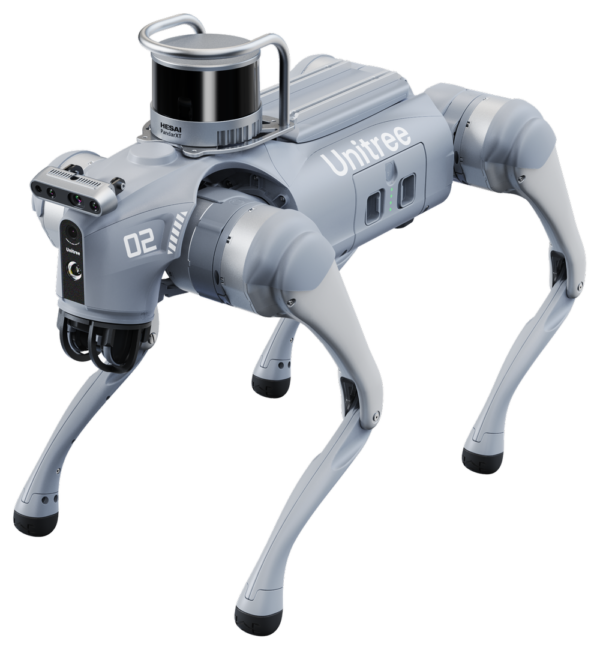
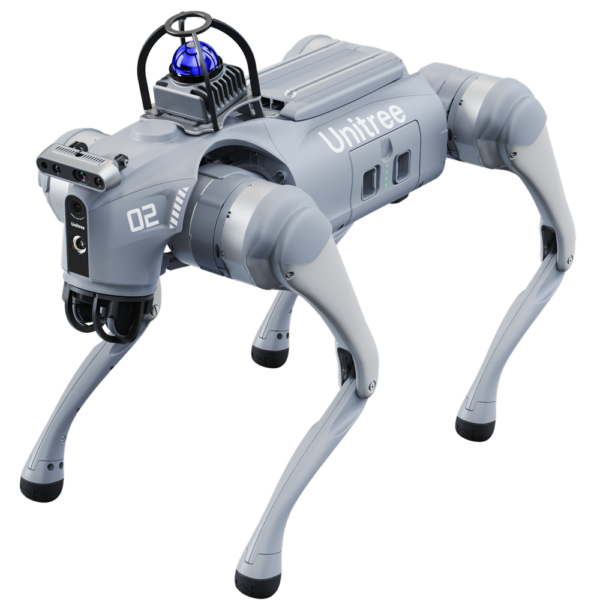
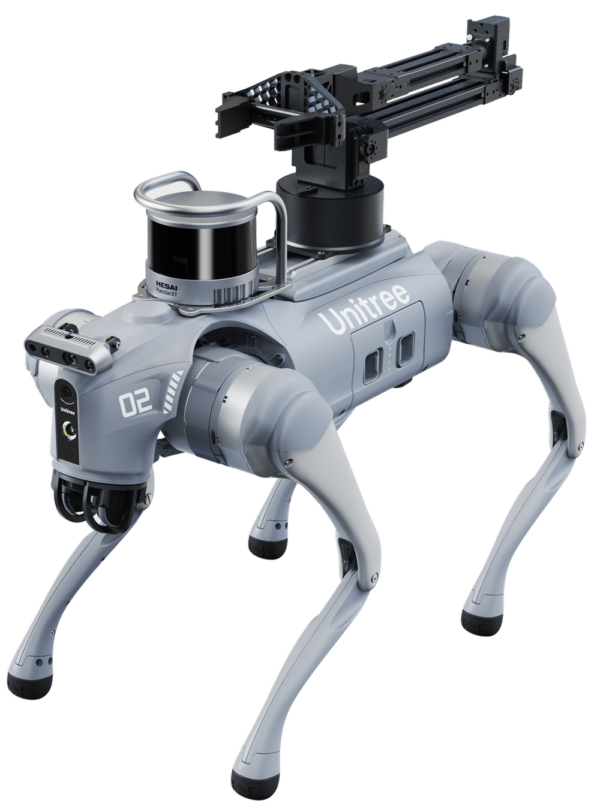
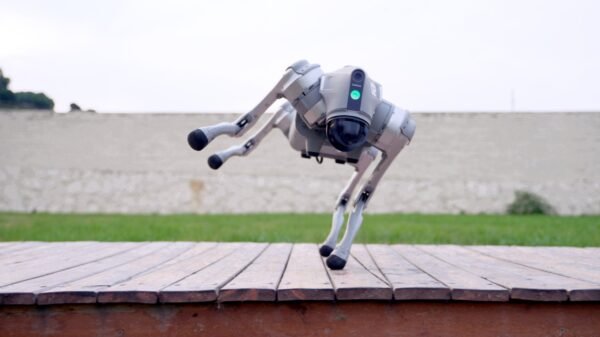
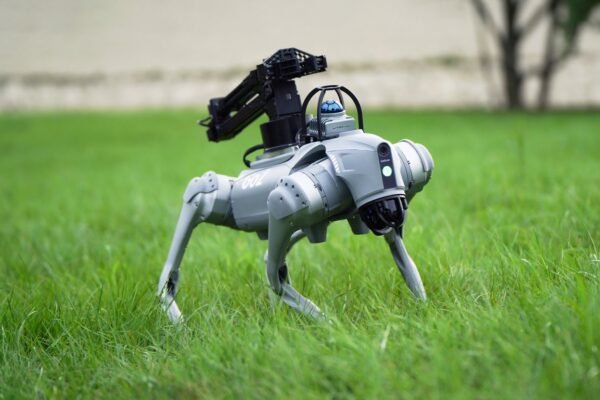

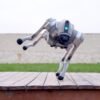
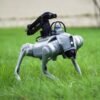
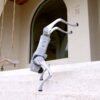
Unitree Go2 EDU is a research and education-grade quadruped “robot dog” designed for AI development, robotics labs, and advanced autonomy experiments with full SDK access and expanded hardware options.
📷 Overview of Unitree Go2 EDU
Unitree Go2 EDU is the advanced developer version of the Go2 robot series. It is built for universities, research labs, and robotics engineers who need full control over movement, sensors, and AI behavior. Compared to standard Go2 models, the EDU version unlocks deeper system access, allowing custom algorithms, autonomous navigation, and sensor integration.
Moreover, it supports high-level research in SLAM, reinforcement learning, embodied AI, and robotics control systems, making it a widely used platform in academic environments.
⚙️ Design and Hardware
Unitree Go2 EDU maintains a compact quadruped design but is built with upgraded components for research use:
- Weight: ~15 kg (with battery)
- Frame: Aluminum alloy + reinforced engineering plastics
- Standing size: ~70 × 31 × 40 cm
- Payload: ~7–10 kg depending on configuration
- Max speed: up to ~5 m/s in advanced modes
So, it is compact enough for indoor labs but powerful enough for real mobility experiments.
🧠 AI, Sensors, and Navigation
The EDU version is focused heavily on perception and autonomy development:
- 4D LiDAR (360° wide-angle sensing) for obstacle detection
- Camera + IMU fusion for mapping and tracking
- SLAM-based navigation support
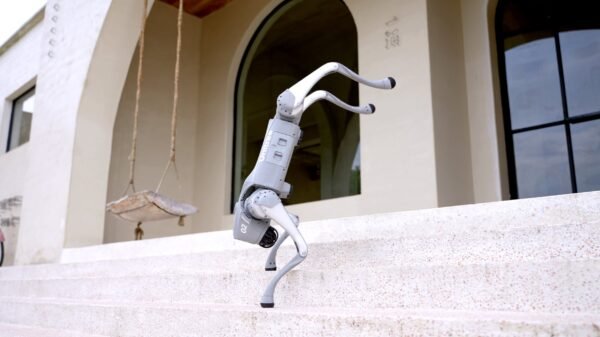
- Advanced AI motion behaviors (jumping, rolling, adaptive walking)
In addition, it supports secondary development, meaning researchers can modify control logic and perception pipelines directly.
🔋 Battery and Runtime
Unitree Go2 EDU is equipped with:
- 8000 mAh standard battery
- Optional 15,000 mAh extended battery
- Runtime: ~2–4 hours depending on workload
Moreover, power consumption varies significantly depending on walking load, compute modules, and sensors.
💻 Software and Development (Key Feature)
This is where the EDU version stands out:
- Full SDK access (Python / C++ / ROS 2 support)
- Support for external compute modules (e.g., NVIDIA Jetson)
- Real-time motion control APIs
- Mapping and autonomous navigation frameworks
- OTA updates and firmware-level customization
As a result, it is widely used for robotics education, AI research, and autonomous system testing rather than consumer use.
🏁 Mobility and Performance
Unitree Go2 EDU is designed for advanced movement research:
- Walking, running, jumping gaits
- Stair climbing and obstacle traversal (~15–16 cm steps)
- Up to ~30° slope climbing capability
- Advanced balance control using joint torque sensing
So, it behaves like a real robotic platform rather than a simple demo robot.
🔑 Key Features
- Research-grade quadruped robot platform
- Full SDK (Python, C++, ROS 2 support)
- 4D LiDAR + AI vision system
- 7–10 kg payload capacity
- Up to ~5 m/s movement speed
- 2–4 hour battery life
- Advanced SLAM + autonomous navigation support
- Expandable compute (Jetson-class modules supported)
🎯 Why Choose Unitree Go2 EDU?
Unitree Go2 EDU is not a consumer gadget—it is a serious robotics development platform. It is used for:
- University robotics programs
- AI and machine learning research
- Autonomous navigation testing
- Legged locomotion development
- Human-robot interaction experiments
✔️ Bottom line
If you want a robot for learning, programming, and AI experimentation, the Go2 EDU is one of the most capable affordable quadruped platforms available today. However, it is not meant for casual entertainment—it is built for engineering and research work.