
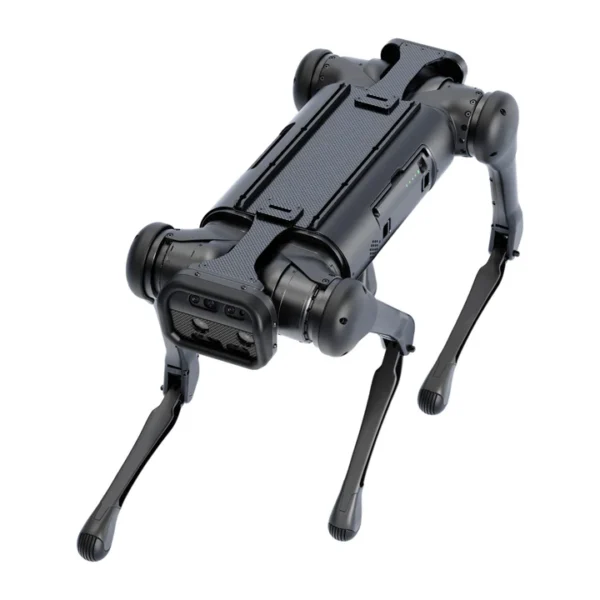

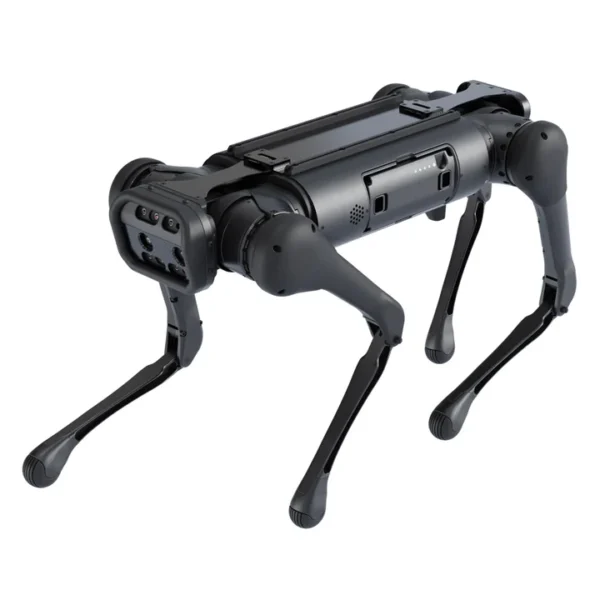
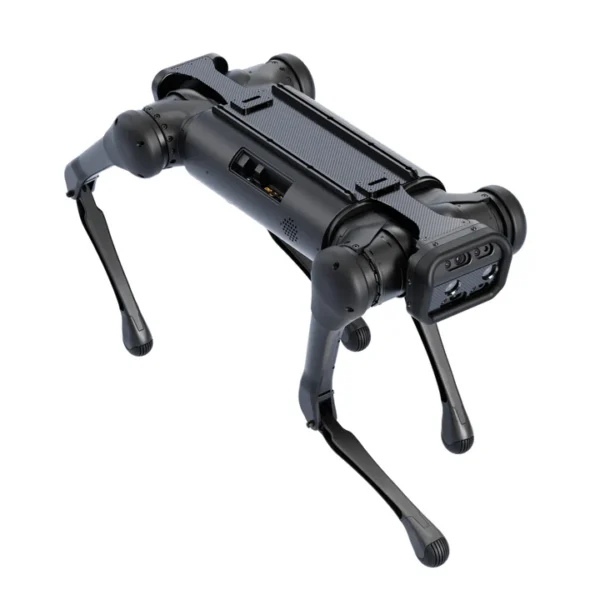

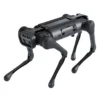
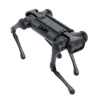
Unitree AlienGo is a high-performance research-grade quadruped robot designed for advanced robotics development, AI research, and complex terrain locomotion experiments with strong stability, sensing, and modular expandability.
📷 Overview of Unitree AlienGo
Unitree AlienGo is one of the earlier professional robot dog platforms from Unitree Robotics, built specifically for universities, robotics labs, and industrial research. It focuses on providing a stable and open robotics system that can be used for autonomous navigation, perception research, and control algorithm development.
It is widely used in academic and industrial robotics studies because it supports ROS-based development, external sensor integration, and real-time control systems.
So, unlike consumer robots, AlienGo is mainly a developer platform for robotics experimentation.
⚙️ Design and Build
Unitree AlienGo is built for durability and experimental flexibility:
- Quadruped (4-leg) robotic structure
- Approx. weight: ~21.5 kg (without battery)
- Compact foldable design for transport
- Reinforced frame for impact resistance during motion
Its body is designed to withstand running, jumping, and collisions while maintaining balance in dynamic environments.
🧠 AI, Sensors, and Navigation
AlienGo is equipped with advanced perception systems for autonomous robotics:
- Dual depth cameras (multi-view vision)
- Visual odometry camera system
- SLAM-based navigation capability
- Real-time 3D mapping and obstacle detection
As a result, it can build maps of its surroundings while moving and adapt to changing environments.
🏃 Mobility and Performance
Unitree AlienGo is known for agile and dynamic movement:
- Max walking speed: >1.5 m/s
- Can run, jump, turn, crawl, and recover from falls
- Climbs slopes and steps (up to ~21–25° depending on configuration)
- Strong balance control even under external disturbance
So, it is designed for research in locomotion and stability control rather than speed performance.
🔋 Battery and Endurance
AlienGo is optimized for laboratory and field testing:
- Operating time: ~2.5 to 4.5 hours depending on use
- Intelligent cooling system for thermal management
- Rechargeable lithium battery system
Therefore, it supports medium-duration robotics experiments and field trials.
🧩 Openness and Development Support
One of AlienGo’s strongest features is its open development system:
- Supports C/C++ and ROS integration
- Full sensor data access for research
- External ports for custom modules (LiDAR, cameras, robotic arms, GPS)
- Onboard computing support in developer configurations
This makes it highly flexible for AI, robotics, and control system research.
🏭 Use Cases
Unitree AlienGo is used in:
- Robotics research and education
- Autonomous navigation development
- Inspection and exploration experiments
- AI perception and control studies
- Academic locomotion testing
It is often used as a test platform for next-generation legged robotics algorithms.
🔑 Key Features
- Research-grade quadruped robot platform
- Max speed: >1.5 m/s
- Operating time: ~2.5–4.5 hours
- Dual depth camera + visual odometry system
- SLAM-based mapping and navigation
- ROS / C++ / Python compatible development
- External sensor and module support
- Strong stability and terrain adaptation capabilities
- Impact-resistant body design
🎯 Why AlienGo Matters
Unitree AlienGo is not designed for consumer use—it is a professional robotics research platform. It is important because it helped establish many of the core technologies used in modern quadruped robots, including:
- Dynamic balance control
- Vision-based navigation
- Reinforcement learning locomotion testing
- Modular robotics development
✔️ Bottom line
Unitree AlienGo is a foundational research robot dog platform built for developers, universities, and robotics engineers who need full control over locomotion, sensing, and AI behavior experimentation.